

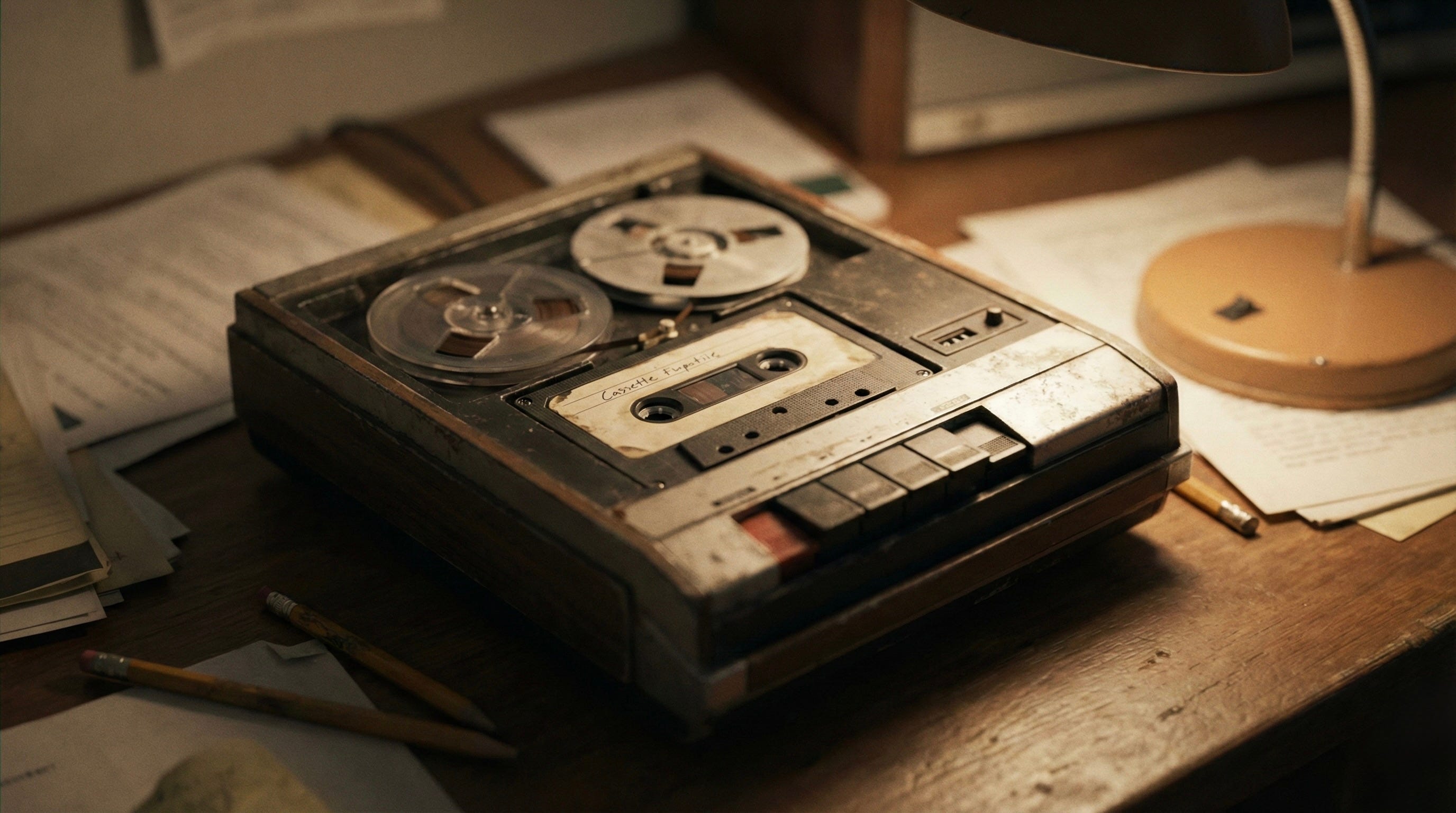
In 2023, twelve years after the divorce, my youngest son recorded a phone call with his mother.
I didn't ask him to do this. I didn't know he was doing it. He made that choice on his own.
He didn't tell me about it until later. He just sent me the file one day, without explanation. When I listened to it, I understood why.
The call happened because my son had visited me and my family multiple times. We traveled together on multiple occasions. He spent time with my wife and stepson. But he didn’t tell his mother. For years, he kept it hidden.
Later, he would explain why. In his own words during the call: “Back then it was out of fear, for sure.”
He was afraid of how she would react.
Eventually, he found the courage to tell her the truth. He told her about the visits, the trips, all of it. This call was what followed.
Twelve years after the divorce, telling his mother he had seen his father was still something that required punishment.
What I Heard
The recording is eleven minutes long. A phone call between a mother and her adult son.
I won’t transcribe the whole thing. That’s not the point. The point is what I recognized when I heard it: the same tactics I had experienced for years, now directed at my son.
When I heard her say, “You treated me like shit,” I recognized the inversion. The accusation aimed at the person who had pulled away, not at the behavior that pushed them.
When I heard her say, “I still think you’re selfish,” I recognized the characterization. The reduction of a complex person to a single, damning label.
When I heard her say, “The one thing I thought you and your brother were different... my boys calling me,” I recognized the comparison. The triangulation. The implication that he was failing a standard his brother had met.
When I heard her say, “You’re being protective and in a level vengeful,” I recognized the reversal. The person being attacked was now being accused of being the aggressor.
These were not new tactics. They were the same ones I had documented in 2011, when my son called me a demon on Facebook and his mother praised him for it. The same ones I had described in court filings in 2012. The same ones I had written about in these pages.
The only difference was that this time, I wasn’t the one describing them.
My son had captured them himself.
The Pattern
Alienation is not a single act. It’s a pattern of behavior that repeats across years, across relationships, across generations.
In 2011, I was the target. My sons were taught to see me as the villain: the “demon,” the absent father who chose to leave, the man who didn’t try hard enough.
In 2023, my son became the target. The same accusations. The same guilt. The same implication that love was conditional on compliance.
The framing was familiar. The person who pulls away is the betrayer. The person who enforces the pulling is the victim. The relationship is transactional: call me, visit me, prove your loyalty, or face the consequences.
I had lived inside that framing for over a decade. Hearing my son navigate it was like watching someone walk through a house I had been trapped in, recognizing every room.
What It Confirmed
I have written before about the danger of overstating what evidence proves. Probability is not certainty. Pattern is not proof of intent.
But this recording confirmed something I had struggled to articulate: in my view, the behavior was not simply a reaction to the divorce. It was not a product of conflict between two adults who couldn’t get along. It was not something that ended when the custody battles stopped.
Twelve years later, the same tactics. The same guilt. The same conditional love.
Directed at a son whose brother, at nine years old, had been coached to call me "demon."
This was not divorce anger. This was not a phase. In my view, this represented a consistent pattern: when someone pulled away, they became the villain.
In my view, the recording documented a pattern of emotional manipulation that had shaped my sons’ understanding of me, of her, of love itself.
My Son’s Response
The most striking moment in the recording was not something she said.
It was what my son said in return.
“I don’t hold grudges.”
Four words. Calm. Measured. The response of someone who had learned to survive a dynamic I had tried and failed to protect him from.
He did not escalate. He did not defend himself by attacking. He simply stated a boundary: I am not going to carry the weight of your disappointment.
I don’t know what my son believes about me now. I don’t know if he has read what I’ve written here. I don’t know if he remembers the years when we played Call of Duty together, when he called to say goodnight, when he asked to stay longer at my house.
But I know this: when confronted with the same tactics that had been used to separate us, he did not comply. He held his ground.
He saw it too. Later, he told me he recognized the comparison, the golden child dynamic, the feeling of being attacked by the person who was supposed to love him unconditionally.
That is more than I was ever able to do.

What It Means
I am not publishing this to attack anyone. I am not seeking revenge. I am not trying to win a war that ended years ago.
I am publishing this because for twelve years, I was the only witness to a pattern that shaped my family. I documented it. I described it. I tried to prove it in court. Once, an outside eye saw it too. And still I was told, again and again, that I was exaggerating. Misremembering. Bitter.
Now there is a recording. Made by my son. Of a conversation I was not part of. That captured the same dynamic I had been describing all along.
The pattern didn’t end with the divorce.
It was finally documented by someone other than me.
The Bond Remains
I still don’t know where things stand with my sons. The silence continues. The distance remains.
But something shifted when I heard that recording.
For years, I wondered if I had imagined it. If I had been the problem all along. If the story she told about me was the true one, and my version was just the delusion of a man who couldn’t accept his own failures.
The recording didn’t heal anything. It didn’t restore what was lost. It didn’t bring my sons back.
But it confirmed that I was not the only one who saw it.
And sometimes, that is enough.
Author’s Note: This article is a work of personal nonfiction based on my own memory, correspondence, and documentation. It reflects my individual perspective and experience, and is not intended as legal or psychological advice. Some names, timelines, or identifying details may have been changed to protect the privacy of all involved.
A Note on Gender: While I write this from my perspective as a father speaking about an ex-wife, the behaviors of alienation and high-conflict control are gender-neutral. If you are a mother experiencing this, simply swap the pronouns; the pain and the patterns are exactly the same.
Resources & Further Reading
For Understanding Alienation Patterns
Rules of Estrangement: Why Adult Children Cut Ties and How to Heal the Conflict — Dr. Joshua Coleman
Coleman’s work addresses how alienation dynamics can persist into adulthood, and how parents can maintain hope without enabling dysfunction.
Adult Children of Parental Alienation Syndrome: Breaking the Ties That Bind — Amy J.L. Baker, PhD
Research-based exploration of how children who were alienated experience and process the dynamic as adults.
On Emotional Manipulation in Families
Stop Walking on Eggshells — Paul T. Mason & Randi KregerA practical guide for people who love someone with borderline or narcissistic patterns. Helps identify the tactics without requiring diagnosis.
Support
Family Troubles — Dr. Joshua Coleman’s SubstackOngoing writing from one of the leading experts on family estrangement. Compassionate, practical, grounded in clinical experience.
Again, I wish I could read your stuff. Everything is still too raw. Thank you for speaking your truth.