

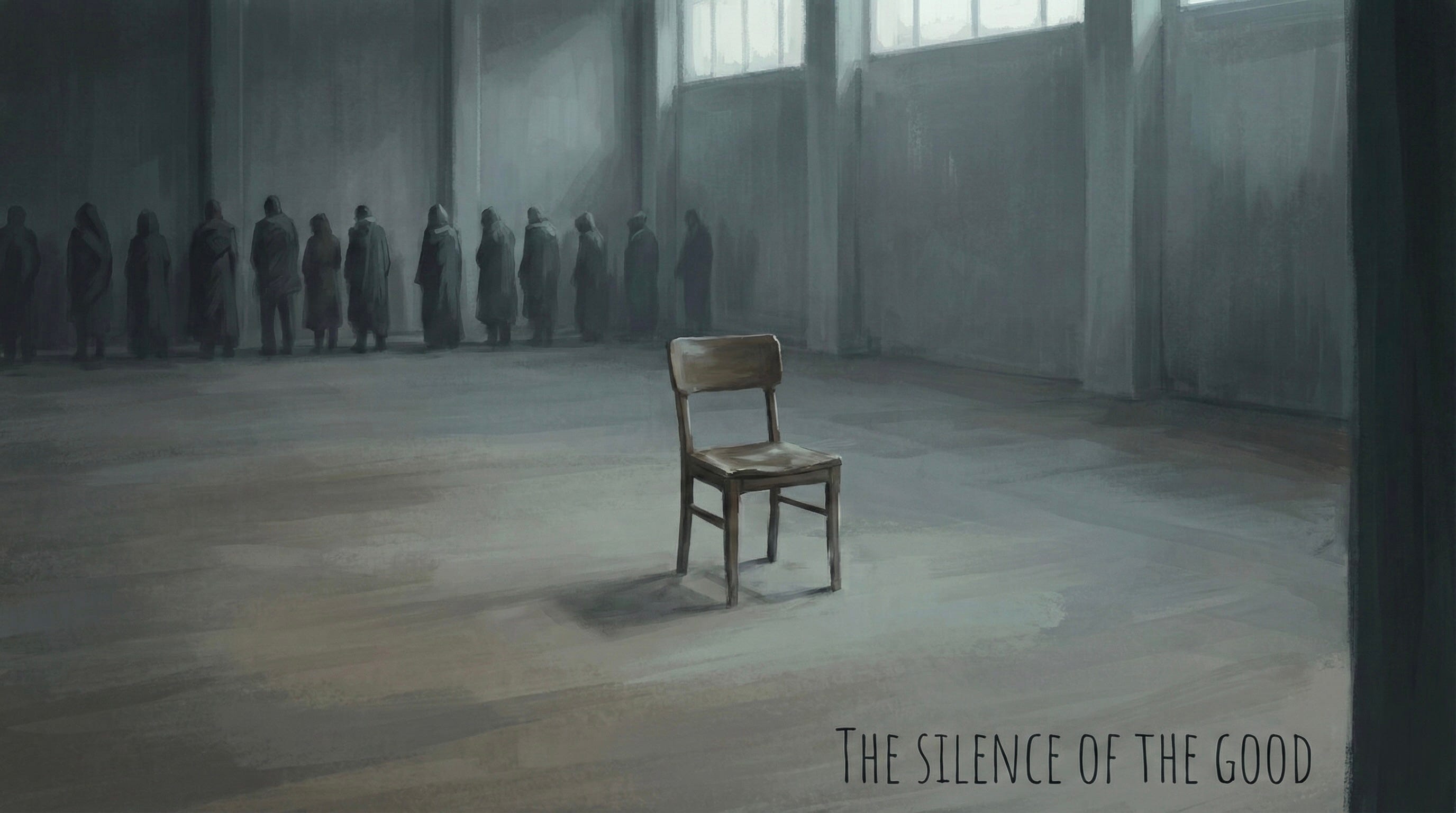
We expect the attacks from the people who hate us. We do not expect the silence from the people who claimed to love us.
Last week, we talked about the Coalition of the Miserable; the loud, aggressive alliance between an ex-spouse and an estranged sibling. We scrutinized the people setting up the cameras, writing the affidavits, and recruiting the children into the war.
But there is a second group of people in the landscape of alienation. They don’t set up cameras. They don’t scream in court. They don’t send hateful texts.
They just do… nothing.
These are the “Good Relatives.” The cousins you grew up with. The aunts who sent birthday cards for thirty years. The friends who know you are a good father.
When the Coalition launches its smear campaign, you turn to these “Good Relatives” expecting a firewall. You expect them to say, “Wait a minute. I know Steve. That doesn’t sound true.”
Instead, you get a dial tone.
This is the Bystander Effect. And in many ways, it breaks your heart more than the abuse itself.
“I’m Not a Fan of Gossip”
The Bystander usually has a script to justify their silence. It is almost always framed as a moral high ground.
A few years ago, I found myself excluded from a family reunion, a decision made by others to 'avoid conflict' with an estranged sibling. I reached out to a cousin to understand why I was being erased from a family I had known my entire life. I wasn't looking for a debate; I offered to show him the cold facts. I offered the court records and documentation that disproved the narrative being used to justify my exclusion.
His response was a masterclass in the Bystander Effect:
“My knowledge of your family dynamics … is limited. By design … I’m not a fan of gossip... So I’ve stayed out of it. But yes, my mom and [your sister] recommended I hold off from inviting you... so I took their recommendation.”
Read that carefully.
“I’m not a fan of gossip.”
It sounds noble, doesn't it? Like he is choosing to stay above the fray. But in the architecture of alienation, labeling objective evidence as 'gossip' is a tactical deflection. It allows the bystander to dismiss the reality of the excluded individual without ever having to confront the behavior of the one doing the excluding. It turns the search for truth into a social inconvenience.
By refusing to look at the evidence “by design,” the Bystander preserves their own comfort. If they looked at the court orders, the receipts, or the police reports, they might have to make a difficult choice. They might have to stand up to the bully.
So, they choose “neutrality.” They choose to “take the recommendation” of the alienator because it is the path of least resistance.
The Funeral Test
The true cost of this neutrality isn’t just a missed reunion. It is a moral failure during life’s most critical moments.
When my mother passed away, the Coalition… specifically my sister and her family… initiated legal action that would have effectively prevented my father from attending his own wife’s funeral. They utilized the court system in a way that threatened to keep a grieving husband away while his wife was buried.
I had to fight in court, presenting minute-by-minute itineraries to a judge, just to ensure my dad could say goodbye to the woman he loved.
Where were the “Good Relatives” then?
Where were the cousins who “don’t like gossip”? Where were the aunts who “don’t want to get involved”?
They were silent. They watched as a faction of the family tried to weaponize a funeral, and they said nothing. They let the exclusion happen because speaking up would have been “drama.”
The Myth of Neutrality
We need to stop calling this behavior “staying out of it.”
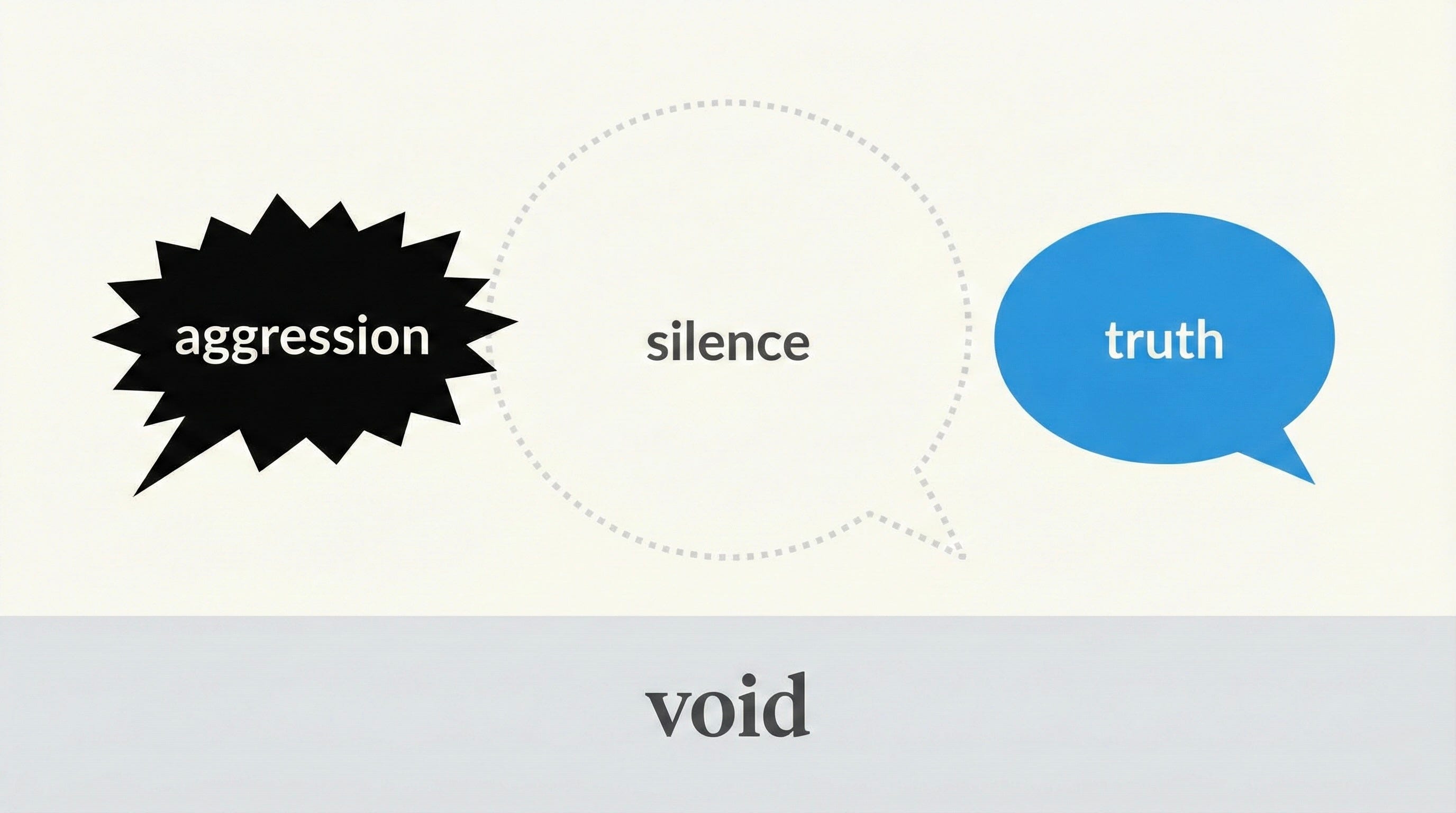
In a high-conflict situation where one side is using lies, manipulation, and psychological weapons to erase a human, there is no such thing as neutrality.
If you see a bully beating someone up in a schoolyard and you turn away because you “don’t like violence,” you haven’t stayed neutral. You have helped the bully. You have signaled that there are no social consequences for their aggression.
The Alienator relies on the Bystander. The Coalition of the Miserable creates the lie, but the Bystanders give it oxygen by refusing to challenge it.
The Hardest Acceptance
For a long time, I tried to wake the Bystanders up. I had conversations with my one of my aunts hoping that if I just explained it clearly enough, she would see the truth.
But I learned that you cannot wake someone who is pretending to be asleep.
The Bystanders are not confused. They are comfortable. They have calculated that the cost of supporting you… the awkwardness at Thanksgiving, the anger of the Coalition… is too high.
So, what do we do?
We stop asking them to speak. We accept their silence as their answer.
We realize that we lost these family members because of what they refused to see. We grieve them, yes. But we do not wait for them.
We build a table with the people who are brave enough to sit with the truth. It might be a smaller table. But at least the seats are real.
Author’s Note
This article is a work of personal nonfiction based on my own memory, correspondence, and documentation. It reflects my individual perspective and experience, and is not intended as legal or psychological advice. Some names, timelines, or identifying details may have been changed to protect the privacy of all involved.
A Note on Gender: While I write this from my perspective as a father speaking about an ex-wife, the behaviors of alienation and high-conflict control are gender-neutral. If you are a mother experiencing this, simply swap the pronouns; the pain and the patterns are exactly the same.
Resources & Further Reading
Understanding The Bystander Dynamic
The Bystander Effect in Families: Psychology Today: The Bystander Effect
Why read this: While often applied to public emergencies, this concept explains the “diffusion of responsibility” where family members assume “someone else” will handle the conflict, leading to collective silence.
The False Comfort of Neutrality
Why Neutrality is Toxic: Psychology Today: When “Staying Neutral” is Actually Bullying
Why read this: This article breaks down how silence and “refusing to take sides” in the face of aggression is a form of passive-aggression that empowers the abuser.
Systemic Silence
The Enablers (Flying Monkeys and Bystanders): Narcissist Abuse Support: The Enabler
Why read this: A clear definition of the different types of people surrounding a high-conflict individual, distinguishing between those who actively attack (Flying Monkeys) and those who passively allow it (Bystanders).
Coping with the Loss
Disenfranchised Grief: Scientific American: The Grief of Estrangement
Why read this: Validates the specific pain of losing family members who are still alive but have chosen to cut you off or stay silent.