

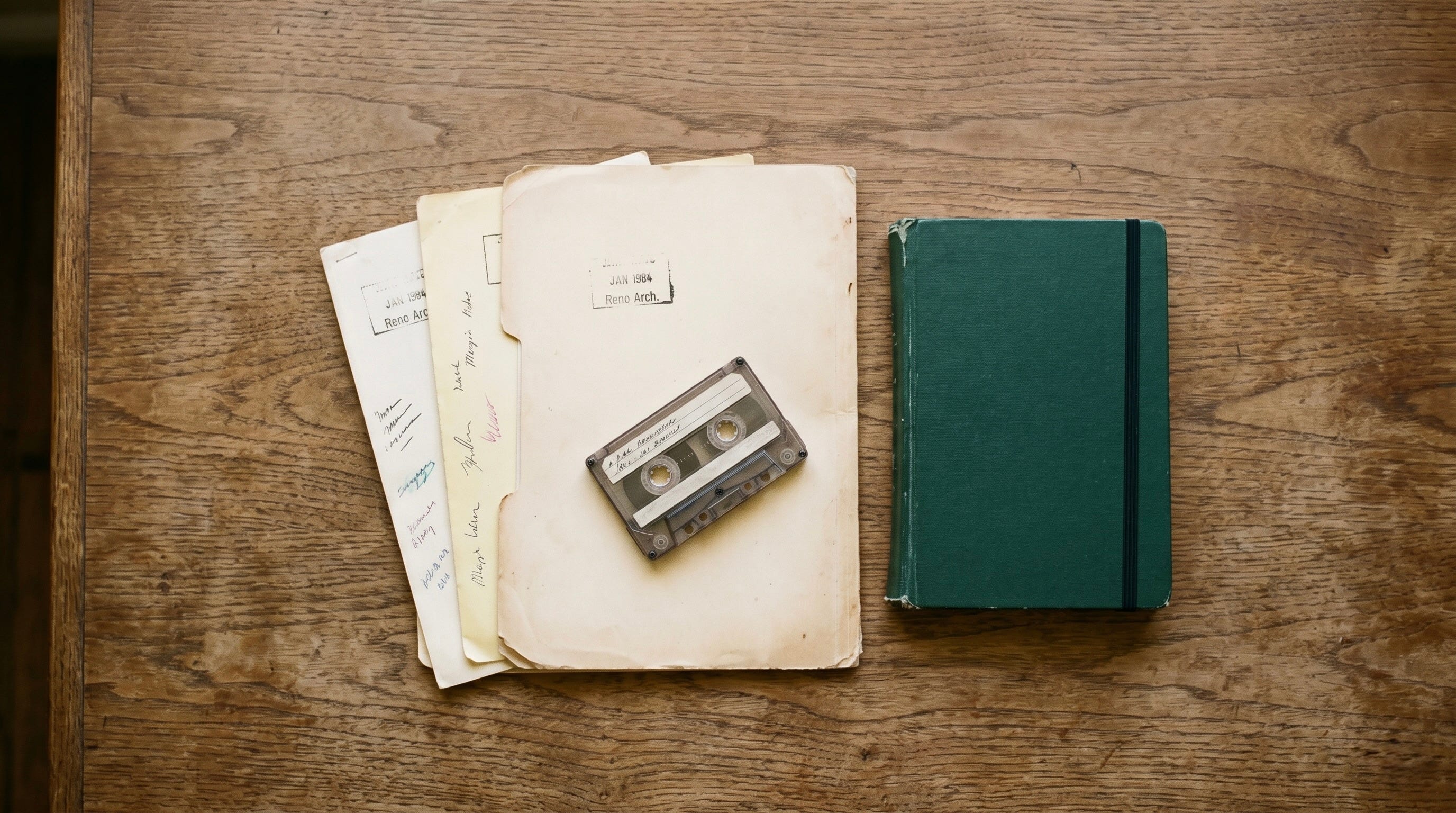
The Recording arrived twelve years after the divorce: proof, in my son’s voice, that the pattern didn’t stop. She Wasn’t Getting Any Money is a set of payment receipts, documenting every dollar paid on time.
Both are now on a Substack post. I’ve been thinking about that.
A newsletter is a conversation. Newsletters get indexed and then they don’t. Algorithms shift. Platforms change their terms of service. URLs break. A family court filing from 2012 doesn’t link to a Substack post from 2026, and even if it did, the link won’t hold indefinitely. A researcher, or an attorney, or a son looking for context ten years from now, won’t necessarily know where to start.
There’s a difference between something a reader bookmarks and something they can hand to a judge.
Documentation is only useful if it’s permanent.
The Three Books This Isn’t
There’s good literature on parental alienation. Baker, Warshak, Harman. Peer-reviewed, first-person-absent, evidence-rich. You read it and you understand the framework. You don’t feel it from the inside.
There are memoirs. Most of them were written during the acute phase: while the author was still in family court, still hoping the ruling would shift, still carrying the uncertainty of an unresolved proceeding. Raw and urgent, legally constrained. They close with “to be continued” because there’s nowhere else to end.
And there are co-parenting guides. Books written for situations where both parents are reachable. Useless once the wall is built.
What I’ve been writing here is none of those things.
A 12-year vantage point. The evidence already in hand. The court already done with its answer. The proof arriving not from attorneys or advocates but from my own son, on tape, over a decade after the divorce, from a conversation he chose to document and chose to share. And alongside it: payment receipts, legal filings, a court docket that’s publicly accessible.
Closer in form to a documentary record than to a memoir of survival.
In Real Time
There’s something specific about writing this as it was happening.
I didn’t know what the evidence would eventually show when I started. The shape wasn’t mapped in advance. Each piece was written from inside a situation that was still unresolved, about events that were still in progress, often before I understood what they meant.
Memoirs are typically written in retrospect, shaped by the knowledge of how things ended. This is shaped differently. The notes are dated. The documentation is timestamped. The articles came later, but they’re constrained by what was already written down, not by what I now wish had been written down.
I’m not sure that was entirely by choice. Some of it was. Some of it was just the way events moved.
Who It’s For
Parents sitting with documentation they don’t know what to do with. People who kept the emails, kept the voicemails, kept the screenshots, and then discovered that keeping them didn’t change anything because nobody in the courtroom looked.
Adult children who will one day want to know what the record actually shows.
Family court advocates who understand that a receipt is different from a character witness.
Researchers who need a primary source, not a clinical summary.
That second one is the audience I think about most.
A Question About the Title
There are two options. They do different jobs.
The Unwitnessed Years is about the record itself. The years when I was their father and no one was watching, when the documentation was building and no court was reading it, when the love was consistent and the story said nothing.
Not Gone, Just Waiting is about the posture. Twelve years of not disappearing, not stopping, not accepting the silence as final.
The first one is closer to what the book actually is. The second is closer to what it cost to write it.
I haven’t decided.
What You Already Are
People who’ve been reading this since the beginning are already on the first list. Not a pre-order list. Not a waitlist. The early list. The people who’ll read it before it has a cover, before it has a publication date, before anyone else knows to look for it.
Subscribe if you haven’t. The newsletter has been the first draft of something that needs to exist somewhere more permanent than an inbox.
I’ve been keeping this record for twelve years.
I’m not stopping now.
Author’s Note: This article is a work of personal nonfiction based on my own memory, correspondence, and documentation. It reflects my individual perspective and experience as I understood events at the time, and is not intended as legal or psychological advice. All financial records referenced are the author’s personal payment documentation. Identifying details of third parties have been redacted. Alienation and high-conflict family dynamics are gender-neutral. If you’re a mother sitting with this same documentation, the patterns translate directly. Swap the pronouns as needed.