

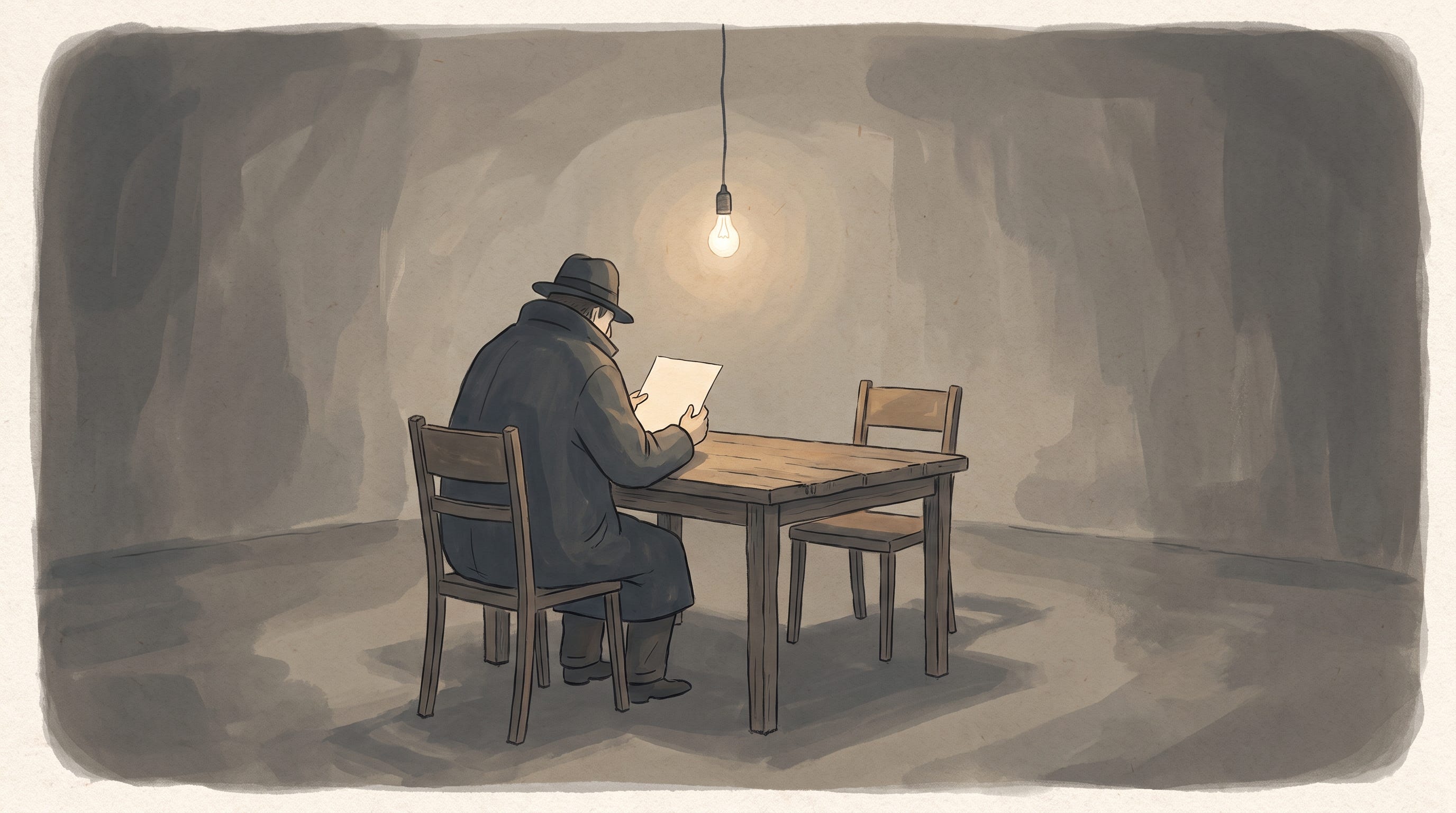
The advice is often the same. Stop defending yourself. Own your part. Give a non-defensive acknowledgment of the specific harm you caused, and then change. I’ve read some version of it a hundred times.
It’s good advice. It was written for a different man.
The advice people give
There’s a whole literature now, and most of it is sound. Joshua Coleman, who has spent years working with estranged parents, tells them to drop the defense and write what amounts to a letter of amends: name the specific hurt, don’t explain it away, don’t ask for anything back. Karl Pillemer’s survey work at Cornell found that reconciliation happens more often than people expect, and when it holds it usually holds because the parent stopped litigating the past and started listening to it.
I believe all of that. I’ve watched it work.
I know families who clawed their way back across that exact bridge, and the parent who built it did one of the braver things an adult can do. They stopped needing to be right. They sat still while their kid told them what it had been like, and they didn’t reach for the context, or for the version where they’d been doing their best. They just took it. Some of them got their child back. Some of them didn’t, and made the amends anyway.
That’s not weakness. That’s the whole job.
What the script assumes
Underneath the advice there’s a clause nobody says out loud. It assumes the harm ran one direction, from adult to the child. It assumes there is a true account of what one did, that their kid is holding it, and that one’s only work now is to stop arguing and receive it.
For a lot of parents that clause is simply true. The account their child is holding is accurate, and the apology is overdue.
For others it’s the whole question.
The part I’d take in a heartbeat
I want to be careful here, because this is the spot where someone can start sounding like they’re protecting themselves.
I have a list. I worked too much in the years that mattered most, and you don’t get those years back. If either of my children came to me tomorrow with their own list, I’d listen. Every line of it. I wouldn’t defend a word (I’ve run that conversation in my head more times than I’ll admit here, and in the version I keep, I don’t say “but”).
The confession they’re waiting for
The apology the story wants from me isn’t on that list. It’s on a different one, and I didn’t write the different one.
The confession that would satisfy the room is a confession to being the man my sons were told I was. The one who didn’t care. The one who wasn’t safe to be near. From what I’ve lived and documented, the man built in those sentences was assembled while the boys were too young to check the sourcing. To apologize for him wouldn’t be humility. In my view it would be signing the thing. It would be putting my name to a version of false events I spent years examining and then calling that peace.
There’s a strange cost in being asked to perform contrition for actions that were authored, not committed. You can feel how much easier your life would get if you’d just say the line. Reconciliation is right there on the other side of it. All it costs is agreeing you were the thing they made you into.
I keep not being able to pay that.
And there’s a second cost, quieter than mine. If I agree to it, I hand my sons a father who agrees he was the villain when he was not. I close the one door they might still walk back through someday: the door where the record says something different from the story they were raised inside. Confess to the invented man and I become the evidence against myself. Then there’s nothing left for them to find but the version that took me from them in the first place.
The double bind
Many targeted parents end up in the same place. If I don’t perform the apology, the silence gets read as the guilt itself. If I explain any of this, the explaining gets read as exactly the defensiveness I was warned about. There’s no move the story can’t fold back into proof. The refusal to confess becomes the confession.
Sometimes I think the people who built the wall knew it would work like that. Sometimes I think they told the story so many times it stopped being a story to them and started being memory. As I’ve written before, I can’t always tell which. The room closes the same either way, and I’m the one standing outside it holding a page meant for somebody else.
So I keep the real list, and I work the real list, and I leave the door open the way I always have. What I won’t do is sign the other one to buy back a single conversation. Not because I’m proud. Because a bought conversation would be built on the same lie that took the first ones.
I’ll own every failure that’s actually mine. I won’t sign my name to the ones that aren’t.
Author’s Note
This article is a work of personal nonfiction based on my own memory, correspondence and documentation. It reflects my individual perspective and experience, and is not intended as legal or psychological advice. Some names, timelines and identifying details have been changed or withheld to protect the privacy of everyone involved.
A note on gender: while I write from my perspective as a father, the patterns of alienation and estrangement are not gender-specific. If you are a mother living through something similar, the weight of it belongs to you too.