

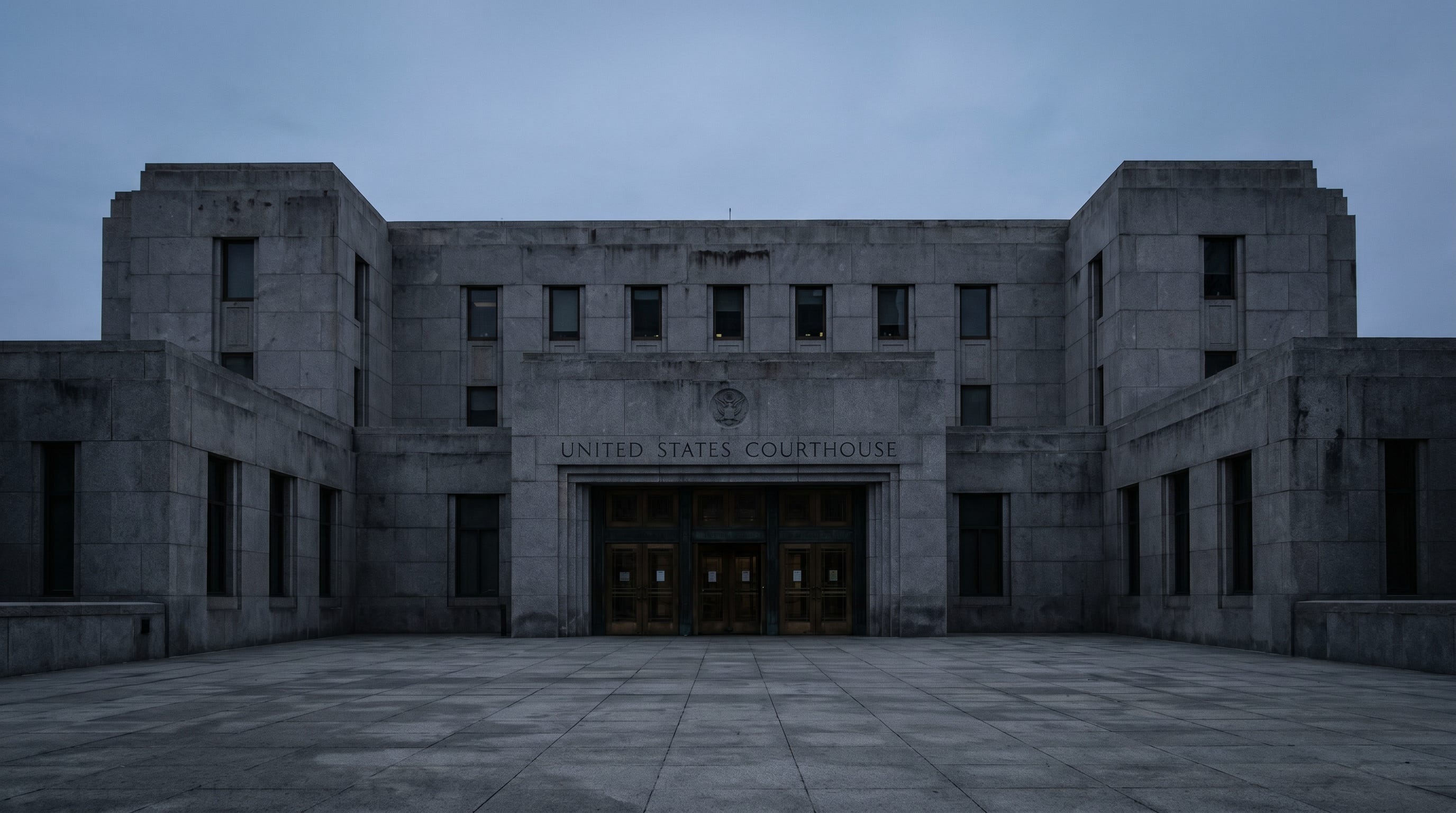
There’s a specific quality to learning someone went to your employer.
It doesn’t come to you directly. You don’t get a confrontation. The information arrives sideways: a note from HR, a colleague who mentions something, a quiet conversation that shouldn’t have been necessary. In my view, that’s part of what makes it effective. By the time you find out, it’s already made an impression somewhere.
In March 2024, an “anonymous” email arrived at my company’s Human Resources department.
I wasn’t the first person to read it.
What It Said
The email described my wife and me as “dangerous people who thrive on inflicting pain.” It claimed I “spend much of my time cyber bullying, and cyber stalking people through various accounts.” We were allegedly “involved in illegal activities.” There was, it said, “video evidence of both of them acting aggressively at a school event.”
I read those words carefully when I finally saw them documented. I’ve been reading things carefully for a long time.
The school event reference lands a specific way. There’s one incident I know of at a school event. In 2018, at my son’s high school graduation, an incident occurred that my attorney later documented in the March 28, 2024 cease and desist letter. From what I witnessed, my wife was physically grabbed by someone from the other side of that family. She pulled away. She repeatedly yelled for him to stop.
From where I stood, the email inverted it. It took the person who was grabbed and called her the aggressor. It took the person who documented the incident and called him a stalker operating through fake accounts.
My attorney’s cease and desist letter cited the email directly and attributed it to my ex-wife by name. The letter formally alleged defamation (California Civil Code §47), slander (§46(1)), libel (§45) and harassment (CCP §527.6).
That language is not my characterization. It’s my attorney’s. In a signed legal document. Sent to a specific person.
What Was Also in Motion
The email wasn’t the only thing in motion.
Around the same time, a separate claim was circulating: that I had faced “substantial financial penalties” from trust litigation. That the court had ruled against me financially. That I had lost.
I hadn’t. The court record is public. The case was dismissed following a mutual agreement. No monetary sanctions. No financial penalties of any kind were imposed.
The cease and desist letter addressed this directly, pointing to the court record: the case “concluded with a dismissal with prejudice following a mutual agreement. No monetary sanctions or penalties were imposed.”
I don’t know exactly who heard the version with the financial penalties. I don’t know how many people received it as fact. My kids were told the lies - I know that. What I also know is that a verifiably false claim about a publicly available court outcome reached people who likely wouldn’t verify it themselves.
That’s a particular kind of thing. A false claim circulates differently than a true one. It travels through channels where nobody looks up case numbers, in a register that sounds authoritative, about someone the listener already has a complicated feeling about. Most people don’t question and look up court records.
When It Crosses
I’ve written here about what happens inside a family when a conflict goes long enough. The court years. The 2023 recording that showed me the pattern was still running twelve years later.
What I haven’t written about is what happens when a conflict stops being contained by its original territory.
A conflict that stays in family court reaches the people who already know the story. The attorneys, the judge, the family members who pick sides. Everyone inside the perimeter knows the perimeter exists.
An email to HR crosses it.
Dr. Jennifer Harman, whose research classifies parental alienating behaviors as a form of coercive control resembling intimate partner violence, argues that this pattern doesn’t stay contained within the family. It extends into whatever environment is accessible. I didn’t need the research to recognize what was happening. But it’s useful to have a name for it.
Your employer doesn’t have the history. They receive specific allegations from an unverified sender and their job is to take personnel matters seriously. What it produces isn’t a confrontation. I felt it as something quieter than that: the suggestion, planted in a new environment, that you might be something other than what your colleagues have known you to be. That takes time to address. It follows you into spaces where you’d worked hard to be known for other things.
I’m not writing this for sympathy. I’m writing it because it belongs in the same record as everything else.
I’ve been writing this story one piece at a time. The payment receipts. The Facebook posts. The 2023 recording. Each article is a separate document of something separate. What I see, reading them together, is a pattern that doesn’t stay in one location. It moves. When the courtroom closes, it finds another room.
A cease and desist letter addressed to my ex-wife, sent the same month a false financial narrative about a public court outcome was circulating. An employer pulled into something that had nothing to do with either of them.
That’s what the documentation shows, in my view. I’ll let the record speak for the rest.
The Record
There are things I can verify and things I can’t.
I can verify this much: in March 2024, an anonymous email containing those specific words was sent to my company’s HR department.
My attorney’s March 28, 2024 cease-and-desist letter cited that email and addressed who we believed may have been responsible.
As for the trust case: it was dismissed with prejudice. The dismissal included no monetary sanctions, no financial penalties, and no fee award against me.
Subpoenas for records were also issued in an effort to identify the source.
I won’t speculate here about how the financial narrative was passed along, or to whom.
What I have is the legal document that responded to both.
And the public court record that answers one of them.
The record exists.
Author’s NoteThis article is a work of personal nonfiction based on my own memory, correspondence, and documentation. It reflects my individual perspective and experience, and is not intended as legal or psychological advice. References to legal proceedings reflect matters of public record and documentation from my attorney. No conclusions about criminal conduct are stated or implied. Some identifying details have been omitted to protect privacy.
A Note on Gender: While I write this from my perspective as a father, the behaviors described here are not exclusive to any gender, family structure, or custody arrangement. The patterns of targeted harassment and defamation are not gendered. If your experience looks different from mine, the dynamics may still be exactly the same.
Resources & Further Reading
Research on defamation, workplace harassment, and the long-term patterns of high-conflict family situations provides context for what is described here.
Parental Alienating Behaviors: An Unacknowledged Form of Family Violence Harman, J.J., Kruk, E., & Hines, D.A. Psychological Bulletin, 144(12), 2018. Classifies parental alienating behaviors as a form of coercive control resembling intimate partner violence; Harman argues this pattern doesn’t stay contained within the family. It extends into employment, social, and institutional settings. The employer contact documented in this article fits the pattern her research describes. https://doi.org/10.1037/bul0000175
Partner Stalking and Implications for Women’s Employment Logan, T.K., Shannon, L., Cole, J., & Swanberg, J. Journal of Interpersonal Violence, 22(3), 2007. Documents how stalking and harassment by former partners extends into employment settings, creating professional disruption and reputation harm. https://doi.org/10.1177/0886260506295380
Intimate Partner Violence and Its Effects on Workplace Functioning Swanberg, J.E., & Logan, T.K. Journal of Occupational Health Psychology, 2005. Documents the extension of intimate partner conflict into employment settings. https://doi.org/10.1037/1076-8998.10.1.3