

Some people are right to leave. I want to say that first, and mean it.
There are parents who earned every inch of the silence their kids handed them. There are people who got out of a house that was hurting them and saved their own life by walking. When one of them says the word … boundary, no contact … it’s the truest word they own. I’m not here to take it from anyone. I’d defend it.
I just know the same words from the other side of the glass.
The word that means two things
“Toxic” used to be a word for spills. Now it’s a word for people, and people say it with relief, the way you say a diagnosis you waited years to be given. “No contact” has the clean sound of a decision made by someone finally taking care of themselves. “Protecting my peace.” I hear those phrases and most of the time I think: good. Somebody got free.
What I can’t get past is that those are also the exact words I watched get taught.
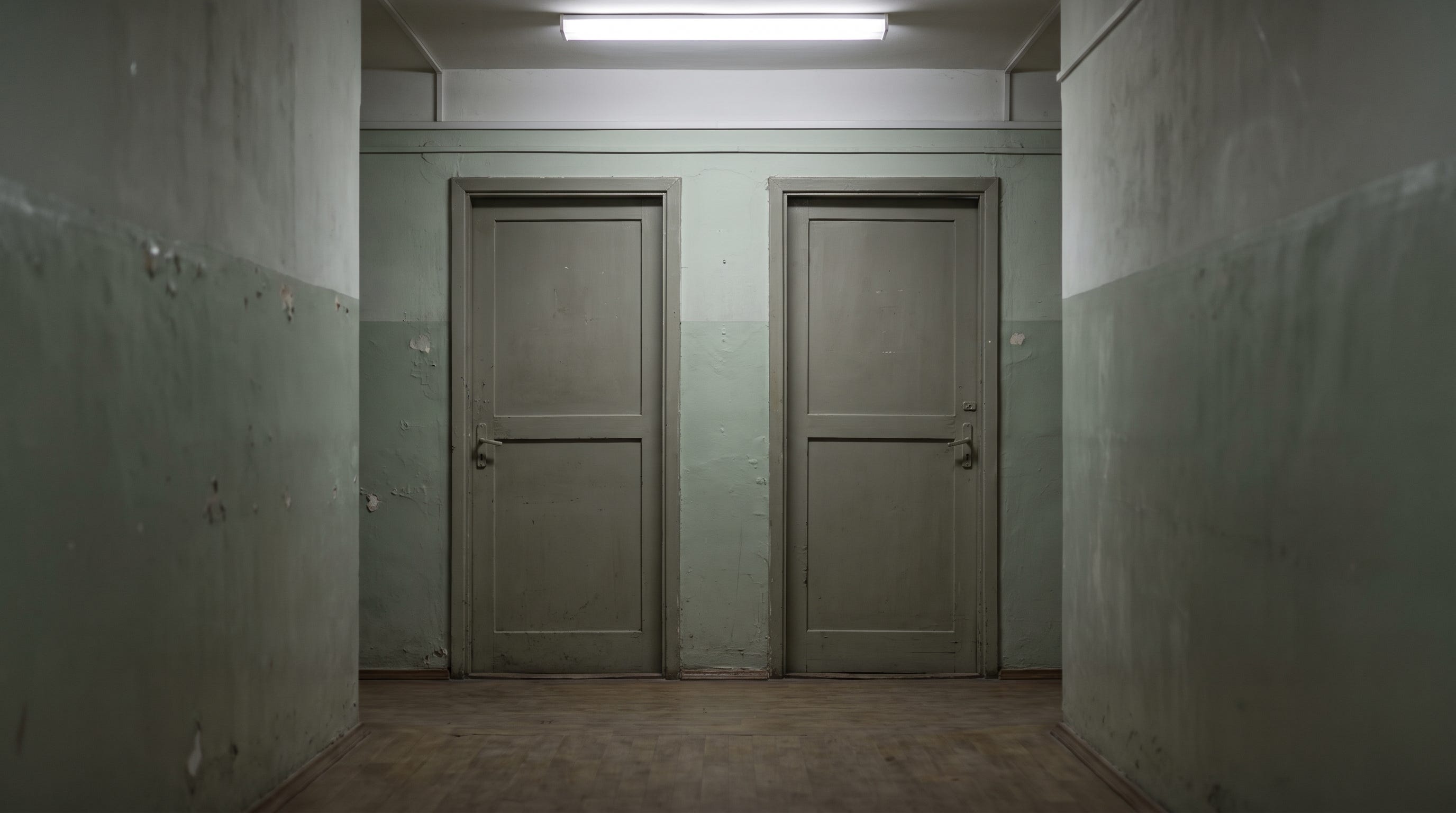
The vocabulary that sets a healthy person free is the same vocabulary you can hand a confused kid to explain a door they were told to shut before they understood what was behind it. Same sentences. “I need space.” “He’s toxic.” On paper there’s nothing to separate them. One is a person climbing out of a fire. The other is a person being walked away from a fire they were never standing in.
I lived the second one. I have the record of it. And the record and the story use the same words.
The side the story picks
The culture has mostly made up its mind about who’s who.
When a grown child goes silent on a parent, the story writes itself one way now, and I understand why. For a long time it wrote itself the other way, and that was worse. For generations the kid who left got called ungrateful and the parent got the benefit of every doubt. The correction was overdue. I don’t want it undone.
But a correction has a far edge. In my view, the far edge is that the parent is now the one who must have done something. From where I’ve stood, it felt like this: the estrangement becomes the evidence. The silence becomes the verdict. Nobody asks what’s behind the door, because the door being shut is taken as proof enough of what’s in the room.
Psychologists have a name for grief the world won’t make space for. Kenneth Doka called it disenfranchised grief: loss that comes with no acknowledged right to mourn, because the relationship or the death or the leaving doesn’t fit what we’ve agreed counts. Estrangement has lived there for a long time. No casserole, no card, no date on the calendar. (There’s barely a word for it that doesn’t change a stranger’s face when you say it out loud.) What’s new is the story settling on top of the grief, the one that hands you the role you’d least choose, in a story most of the room already believes.
So you don’t just lose the kid. You lose your standing to be the one who’s hurt.
I’m noticing how fast the room presumes the other thing, and how little it takes.
Both, without a side
I lose people here, sometimes. Including people who’d otherwise be standing with me.
I won’t say all of it is alienation. That’s a lie. An ugly one. It would throw every real survivor under the bus just to make my own case land softer. And I won’t say none of it is, because I’ve got years of documentation and legal records that says otherwise about my own family. Both are true. I see it as two facts wearing the same clothes.
From the outside … from a dinner table, from a comment thread … you usually can’t tell which one you’re looking at. Some days I can’t tell from the inside either. I turn it over and wonder how much of the wall my sons built was theirs, and how much got handed to them with the mortar already mixed. I don’t get to know. That’s part of it too.
Sometimes I think the people who built it knew exactly what they were doing. Sometimes I think they told the story so many times they came to feel it as true. I can’t always know which one it is. The damage is the same either way.
That’s the sentence I keep landing on. It doesn’t resolve. I’ve stopped needing it to.
What it costs in an ordinary room
It shows up where you’d never schedule it.
Someone at a table, a kind person, tells the group about a friend who finally cut off her impossible mother. Everyone nods. Someone says good for her. And they’re probably right; the friend probably did one of the braver things she’ll do. I nod too, because I mean it, and because the alternative is explaining my entire life to people who are halfway through the appetizers.
What they can’t see is that I’m standing in two places at the same time. I’m glad for the friend, the one at this table. And I’m the impossible parent in some other table’s version of the story, the one being nodded about in a room I’ll never get to walk into and answer.
You learn to hold your face still while both of those are happening. It’s a specific skill. Nobody teaches it. You get good at it anyway.
Author’s Note
This article is a work of personal nonfiction based on my own memory, correspondence and documentation. It reflects my individual perspective and experience, and is not intended as legal or psychological advice. Some names, timelines and identifying details have been changed or withheld to protect the privacy of everyone involved.
A note on gender: while I write from my perspective as a father, the patterns of alienation and estrangement are not gender-specific. If you are a mother living through something similar, the weight of it belongs to you too.